Bee Wreath
A Natural Accent for Handmade Projects
As a designer who regularly works with embroidery files for custom projects, I find myself evaluating each design with the same care I would give to a client’s final product. The Bee Wreath is no exception. It carries a quiet charm that feels familiar yet fresh—like a gentle reminder of nature’s delicate balance. Its design speaks to those who appreciate subtle detail and organic shapes, making it a versatile choice for a range of applications.
The First Impression
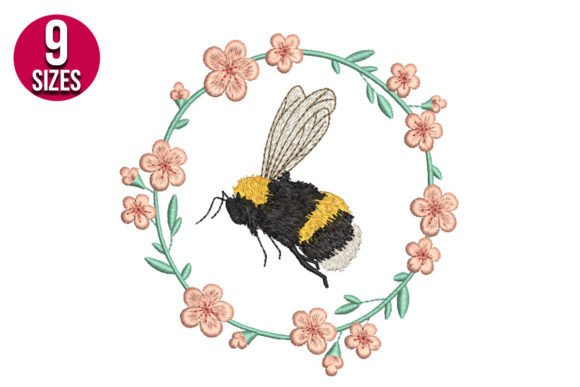
The first thing that strikes me about Bee Wreath is its visual personality. It doesn’t shout; it whispers. The bees are rendered with a soft, almost hand-drawn quality that suggests they’re part of a larger natural scene rather than isolated figures. This gives the design a sense of place, as if it belongs on a garden wall or a rustic table. The wreath itself is balanced and symmetrical, which adds to its appeal in both decorative and functional contexts.
I’m immediately drawn to how the Bee Wreath fits into the category of Bugs Insects. While it’s not overly detailed, there’s enough character in the bee’s body and wings to suggest movement and life. The use of satin stitch and fill stitch creates a smooth, rounded effect that feels natural and unobtrusive. This makes it ideal for those who want a touch of whimsy without overwhelming the fabric.
Real-Life Application: A Custom Tote Bag
Let’s imagine a scenario where I’m preparing a custom tote bag for a client. They’ve requested something simple but meaningful—a piece that can be used in everyday life while still holding aesthetic value. The Bee Wreath fits this perfectly. When stitched onto a light-colored cotton tote, it adds a subtle, elegant flair that complements the neutral tones without competing.
However, I also consider the practicalities. The Bee Wreath isn’t too dense, which means it stitches out smoothly on most machines. But I’d recommend testing it on scrap fabric first, especially if you’re working with a new embroidery file. Checking thread color contrast and stitch density is essential before committing to a finished project. If the design includes tiny lettering or intricate corners, those details may require extra attention during the stitching process.
Where to Use Carefully
While the Bee Wreath is versatile, it’s not without its limitations. For instance, using it on small hoop sizes could result in compressed details, making the bees appear flat or distorted. Similarly, textured fabrics like denim or canvas might affect the clarity of the design, especially in areas with dense stitch work. Dark fabrics can also pose challenges, as the contrast between the design and background may diminish the visual impact.
Products that require frequent washing, such as tea towels or baby clothes, should be approached with caution. The Bee Wreath holds up well, but it’s always wise to test it on a sample first. Additionally, curved surfaces like caps or hats may require additional stabilizer to prevent puckering or distortion. These considerations are crucial when planning for commercial embroidery or crafting handmade products that will see regular use.
Design Impact and Practical Value
The Bee Wreath has a calming presence that enhances the overall look of any project it adorns. Whether it’s a personalized gift, a boutique product, or a digital embroidery file for an Etsy shop, it adds a layer of charm that appeals to a wide audience. Its simplicity allows for easy customization, making it a great option for those looking to create unique, handmade items.
From a professional standpoint, the Bee Wreath contributes to brand consistency when used across multiple products. It’s a design that can be repeated or paired with other elements to create a cohesive collection. This is especially valuable for craft businesses or small shops aiming to build a recognizable style.
Practical Designer Notes
Before using the Bee Wreath, I recommend the following steps:
- Test on scrap fabric to ensure the design stitches out cleanly and maintains its intended shape.
- Check thread color contrast against the fabric to maintain visibility and vibrancy.
- Review stitch density to avoid overcrowding or sparse areas that may detract from the design’s integrity.
- Confirm hoop size to prevent distortion, especially when working with smaller designs.
- Inspect small details like tiny lettering or intricate corners, as these can be tricky to stitch accurately.
- Test in black and white mockups to evaluate how the design performs under different lighting conditions.
- Use proper stabilizer to support the fabric and prevent puckering, particularly on stretchy or thin materials.
- Consider licensing if you plan to sell finished products or digital embroidery files.
These steps help ensure that the Bee Wreath remains a reliable and appealing choice for both personal and commercial projects.
Final Thoughts
The Bee Wreath is a thoughtful design that bridges the gap between simplicity and elegance. It’s a great addition to any embroidery designer’s toolkit, especially for those who value subtle detail and natural aesthetics. Whether you’re creating custom apparel, holiday gifts, or boutique branding, the Bee Wreath offers a versatile and charming solution that stands the test of time.